


The Cost of Manufactured Crisis: Why Billionaires Like Bill Gates Should Be Held Accountable for Climate Narratives

For more than a decade, Bill Gates has positioned himself as one of the world’s leading voices on climate change. Through interviews, TED Talks, foundations, and political partnerships, he has consistently promoted the idea that humanity faces a catastrophic climate emergency — an existential threat requiring drastic and immediate restructuring of agriculture, energy, and economics. Yet, despite his enormous influence, many critics argue that Gates has exaggerated the immediacy and scale of the climate threat, not primarily to save the planet, but to gain political and financial influence.

The argument isn’t that climate change doesn’t exist — it does. The real issue is how climate fear has been weaponized as a political tool, especially by the Democratic Party, which has used doomsday rhetoric to justify trillions of dollars in federal spending and the accumulation of new regulatory power. The fundamental problem is not a lack of environmental awareness; it is the presence of manufactured urgency and manipulated truth. Bill Gates’ message has often been framed as, “The world is burning and governments must act now — no questions asked.” That level of panic leaves no room for debate, no space for accountability, and no tolerance for alternative, potentially less costly, solutions. And conveniently, the proposed solutions always seem to align with the financial interests of Gates and the politicians he supports.
The Climate Crisis That Became a Political Gold Mine
Every time Gates publicly declared a climate catastrophe, he was engaging in more than mere environmental advocacy — he was building political and economic influence. Through extensive political donations, philanthropic partnerships, and his deep relationships with government agencies, Gates helped effectively shape climate policy at the highest levels. Simultaneously, politicians — overwhelmingly Democrats — seized the opportunity presented by the crisis narrative. The pattern established a highly profitable equation: climate emergency equals a blank check, and that blank check translates into billions of dollars. This massive influx of public money was channeled into a variety of initiatives: often-ineffective green energy programs, sprawling government “climate initiatives,” and private companies frequently linked to Gates’ own investment portfolio.

Every fresh public panic seemed to deliver a financial benefit to someone. The Democrat party effectively used Gates’ climate messaging as a moral shield, claiming ethical superiority while aggressively attacking conservatives as “anti-science,” “climate deniers,” or “threats to the planet.” Meanwhile, taxpayers were left funding expensive programs that, according to critical analysis, delivered minimal measurable environmental improvement. If a crisis narrative consistently generates both money and political power for those promoting it, the incentive shifts from solving the problem to simply sustaining the panic. The core aim appears to be less about global salvation and more about controlling the levers of economic and social policy.
When Climate Science Becomes Climate Faith
It is essential to distinguish between climate research, which is real, and climate alarmism, which is often manufactured. The difference holds monumental consequences for democratic governance. Gates has been a major proponent of the idea that the underlying science is definitively “settled.” Yet, true science, by its very nature, is never settled—it evolves, and robust debate is not the enemy of science; it is the very mechanism by which science works. However, Gates and his political allies have often treated any open discussion or challenge to the dominant narrative as a form of heresy. The pattern of response to dissent has become predictable: Question the narrative and you are branded as anti-science; ask where the billions of dollars went, and you are deemed dangerous; point out inconsistencies in models and you are dismissed as politically motivated.

This mechanism is not consistent with scientific inquiry; rather, critics argue it strongly resembles how an ideological cult or an unchallenged political doctrine operates. Instead of welcoming transparency and rigorous peer review across diverse, independent viewpoints, the public has been subjected to a climate where there is a constant risk of censorship for dissenting scientists and analysts, where major tech platforms suppress alternative data, and where mainstream media outlets often refuse to host genuinely balanced debates. When the opinion of one powerful individual becomes immune to substantive challenge, society is no longer dealing with objective research — it is dealing with a form of propaganda designed to advance a specific political and financial outcome.
The Accountability Problem
The current system creates a profound and dangerous accountability deficit. If a billionaire can effectively fuel a widely amplified, yet potentially false, narrative; if politicians can then exploit that narrative to secure money and power; and if absolutely no one is held accountable for the resulting policy failures or exaggerations, then the entire structure of democratic governance is undermined. Billions of taxpayer dollars were allocated based on an atmosphere of manufactured urgency largely driven by Gates’ messaging.
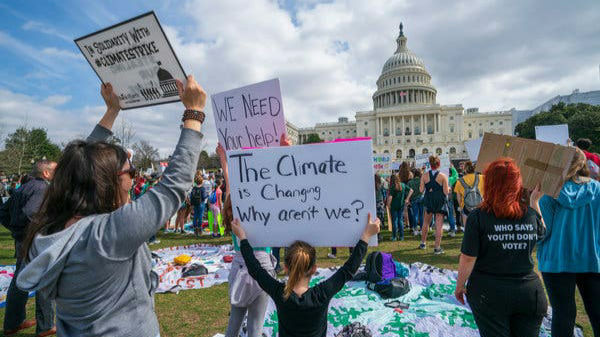
Political attacks were launched, free speech was actively curtailed by influential private platforms, and major legislation was passed—all predicated on a narrative that many are convinced was deliberately inflated for the purpose of control. If the climate crisis was intentionally deployed as a political and financial weapon, the question of accountability becomes critical. If a corporate CEO misleads shareholders, they face the prospect of prosecution. If a private citizen lies under oath, they face jail time. But if a billionaire misleads the global public on an issue of planetary scale, the response often appears to be a systemic shielding from any consequences. This disparity represents a deep injustice and a serious threat to the rule of law.
Who Benefits From a Panic-Based Narrative?
To understand the motivations, one must simply follow the money and the power. The ultimate question is, who truly benefits when farmers are penalized for essential emissions, when fossil fuels are aggressively demonized leading to energy instability, and when digital carbon tracking and pervasive control over individual consumer behavior become normalized? The answer is not the general public, who face economic pressure and reduced choice. Nor is it necessarily the environment itself, which is often subjected to ineffective and monumentally expensive “solutions.” The people who invariably benefit are those aggressively pushing for: expansive carbon tax schemes, widespread digital climate tracking infrastructure, the creation of green tech monopolies, and increased behavioral regulation enforced through policy. Conveniently, Bill Gates is a significant investor in areas that directly benefit from his own policy advocacy, including a large portfolio of U.S. farmland (which profits from increased food regulation), synthetic meat companies (a market justified by climate panic), and numerous carbon tracking and green energy startups. The very crisis he persistently warns about just happens to consistently and dramatically enrich him. This convergence of massive profit and moral advocacy cannot be simply dismissed as philanthropy; it must be scrutinized as a potential case of market manipulation and political coercion disguised as global morality.
Accountability Is Not Optional
The future of the climate conversation demands honesty, radical transparency, and open, vigorous debate — not the impression of unchecked billionaire puppeteering. Bill Gates should not be allowed to influence global policy without the same rigorous oversight and public accountability that applies to democratically elected officials. Politicians must not be allowed to exploit fear as a reliable mechanism for obtaining funding and power. And citizens must never be censored, silenced, or punished simply for asking essential, difficult questions about the motivations, data, and outcomes of these increasingly centralized policies. If society continues to operate with no real consequences for those who mislead the public on issues of this immense scale, then what remains is not a vibrant democracy; it is a system of compliance where fear has been weaponized into a political currency, and freedom is becoming the inescapable cost. Accountability is not about seeking revenge; it is the necessary restoration of public trust and the foundational principle that absolutely no one, not even the world’s most powerful billionaires, is above the law or immune from rigorous scrutiny.


Comments